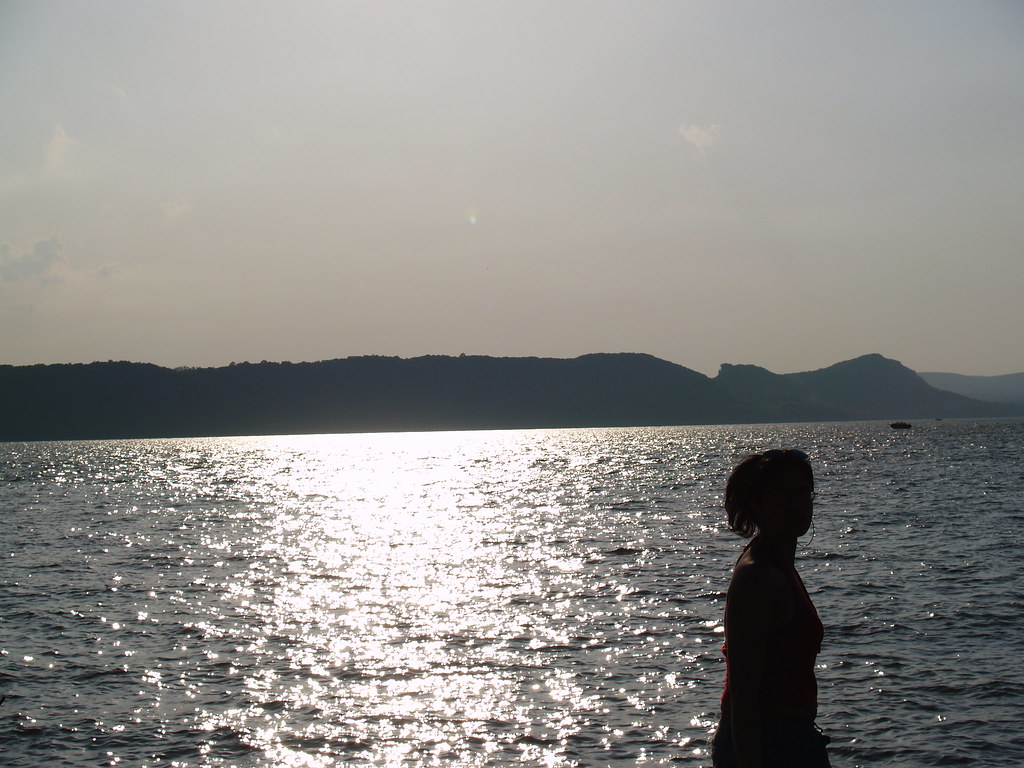
My second L Magazine photoessay, about the PLOT09 art exhibit on Governors Island. Text on the site by Hannah Levine.
Showing posts with label New York City. Show all posts
Sunday, August 9, 2009
The L Magazine: Governors Island: Reimagined and Still Creepy
My second L Magazine photoessay, about the PLOT09 art exhibit on Governors Island. Text on the site by Hannah Levine.
Labels:
Governors Island,
New York City,
Photo Essay,
The L Magazine
The L Magazine: The High Line: West Side Story with a Happy Ending
My first L Magazine (website) piece, a photoessay on the opening of the then-new High Line, in Chelsea.
Labels:
High Line,
New York City,
Photo Essay,
The L Magazine
Friday, July 31, 2009
The L Magazine: Mapping Mannahatta, The Original Manhattan

Markley Boyer, The Mannahatta Project, Wildlife Conservation Society
On The L Magazine:
Picture a time when Kips and Turtle Bays were actual bays, and East Harlem was nothing but plains. When Queens and Brooklyn were still considered part of Long Island, the was Bronx part of Westchester, and the center of New York was just Manhattan. Now it’s a paved paradise with buildings, streets and sidewalks, but back then two-thirds of that island were covered in green forests. Deer, otters, bobcats, and rabbits roamed the thickets. The island was smaller then: 11,817 acres instead of its current 13,690 acres. When Mannahatta was truly the island of many hills, as the Lenape Indians, the original New Yorkers, called it. Welcome to New York, circa 1609.
It’s been 400 years since Henry Hudson and his crew of the Half-Moon set sail up what would become his namesake river and, my oh my, how New York has changed. Instead of soaring trees, there are towering buildings made of brick and steel. Our urban opera now includes honking motorists, screeching tires, constant chatter, construction noise, jackhammers, and blaring music, with the occasional bird chirp somewhere in the mix.
Even though the wild Manhattan of old is long gone, you can get a sense of it in Mannahatta/Manhattan: A Natural History of New York City, 1609 to 2009, a project helmed by Eric Sanderson, landscape ecologist at the Wildlife Conservation Society (WCS). The endeavor exists both as a book and exhibit form at the Museum of the City of New York.
Eric Sanderson thought he’d always live in northern California, where he grew up and got his PhD in landscape ecology at the University of California, Davis. Then he got a job offer from the WCS, which is headquartered at the Bronx Zoo.
In between his far-flung trips trying to figure out how to conserve international ecological systems, Sanderson made his home on City Island, which he describes as “a little bit like an old fishing village, New York-style.” During the weekends, he ventured into Manhattan and acted like a proper tourist, though he couldn’t turn his mind off. “I would go to the Empire State Building and try to figure out how this landscape works,” Sanderson said. “Like how the savannah in Africa works: how does this ecosystem work in New York? It was so different from what I’ve grown up with.” “Manhattan is so extraordinary,” he continued, “it is the densest place in the United states by twofold.”
Whenever he was about to visit a new location, Sanderson did his research and New York was no exception. Often, he would look at old maps, which greatly intrigued him. This was how he stumbled upon the British Headquarters’ Map, dating from 1872. The map was created during the American Revolution by the British Army to figure out strategic strong and weak points throughout New York in order to protect itself from the Americans. The meticulously detailed map included the original shoreline, elevations, and locations of marshes, streams, wildlife and plant life.
“If you take that map and geo-reference it to the city today, then I could figure out where those streams are,” Sanderson said. “All those features are long lost from the island of Manhattan.” That’s exactly what he did, and armed with the map and a GPS system, he created the Mannahatta Project.
The project illustrates that old Manhattan for us through 3D digital renderings combined with photographs of actual similar and current ecosystems, to help create realistic speculative renderings of the wild island by Markley Boyer.
Select images from the book are presented in the exhibition at the City Museum, along with maps paintings, and written observations from various travelers at the time. The animated 3D map, where the landscape of Mannahatta morphs into that of contemporary Manhattan, is projected in the middle of the room, where it feels a little like a campfire. Meanwhile, signs for each section of the exhibit mimic subway signs.
“I really wanted something beautiful and emotional, so that you could connect it first with your heart, and then with your mind,” he said of the design of the exhibit. “The more time you spend with it, the more you experience it.”
What do you learn? Collect Pond was the biggest source of fresh water on the island. After the local tannery polluted the pond and it was filled in, the location became the swampy area known as Five Points, where violent gangs would fight it out, as depicted in Martin Scorsese’s Gangs of New York. Times Square was home to the confluence of two streams that poured into the Hudson River and to Beaver Pond. The Hudson shores were simply sand banks and the East River shores were marshes.
When asked about further expanding the project to cover the outer boroughs, Sanderson said he had a student working on Queens and Brooklyn right now, but there is no funding, so it’s just a summer project. “Queens had 50 percent wetlands,” he noted.
He is also often asked about creating similar projects for other cities, like London and San Francisco. “Certainly, a lot of other cities in the world, you can do it right,” he said, but there are no further plans.
Currently, Sanderson is working on a competition for architects and landscape designers through a fellowship at the Van Alen Institute. In September 2009, contestants will be invited to work design a sustainable working plan for Manhattan in the year 2409, working within predetermined guidelines. “A beaver needs habitat, and you have to supply food and shelter for it to work,” Sanderson says, “so where is the city going to get those things? What will the city produce, what will it get from the surrounding regions, and get from the world?”
While today’s Manhattan is vastly different from the Manhatta of four centuries ago, Sanderson still believes the city has a bright future. “I’m really optimistic about the future of New York City,” he said. “I think people are really ready and hungry for wanting to know how to live their lives in ways that are meaningful and satisfactory, but not in ways that harm the environment.”
He pointed to architecture and the green revolution as evidence: “People are thinking about how we can live in cities in a resource-efficient manner, and there’s a push to express them more fully. Like green roofs that don’t rely on air conditioning.”
“Even closing streets like we do over the summer and encourage people to ride bikes,” he added. “If you take cars off the streets, it becomes really rideable and fantastic.”
When I asked him about his favorite New York City spot, Sanderson responded enthusiastically: “Inwood Park—the place that’s closest to Manhattan and closest to the Hudson River. It has great, beautiful hills and it’s so far uptown that people still haven’t been there.”
Labels:
Mannahatta,
New York City,
Old New York,
The L Magazine
Thursday, July 30, 2009
Sunday, July 12, 2009
The L Magazine: Now Anyone Can Surf The Subway Like a Native

From the L Magazine:
Being a New Yorker for 24-and-something years, I know where I'm supposed to stand on the subway platform if I want to transfer from the uptown F to the Brooklyn-bound L to the Queens-bound G. I stand in the back of the downtown E if I want to get off at West 8th Street at the West 4th Street station, and the front of the train if I want to go to West 3rd Street. After making these trips over and over again, I just learned from experience.
It comes with the privilege of being a New Yorker. It's something you learn after taking the train over and over again. The idea behind the new smartphone application Exit Strategy NYC (which tells you where to stand on what trains for the quickest walk to your desired connection) is nice for those not familiar with the intricacies of the subway, but what about those hard-earned fast-transfer stripes? I guess some things still come with being a seasoned New Yorker, like being flashed at least once on the train. (For me, it was my freshman year of high school on the R train.)
Thursday, April 16, 2009
A Deserted World

A look at New York, post-New Yorkers. Picture taken from io9.
I enjoy exploring abandoned places. By "abandoned places," I mean places that used to be in use and now are left to stand alone, letting nature and time works its course. Now I get to indulge in my obsessions with the new History Channel series Life After People, which does just that, but at a larger scale. What would the world today look like without people to maintain it? Judging from these pictures, beautifully devastating, I'd say. I must watch. The show premieres on April 21st.
Saturday, April 11, 2009
New York City, the State?
This could never possibly happen, New York City and New York State are too reliant on each other. Though, if it were to happen, would New York State still be known as the Empire State, despite not holding claim to our Empire State building? Yep, these are the things I think about.
Saturday, April 4, 2009
New York on the Edge
I like this quote a lot, from an article about Coney Island still being open:
“It always feels like New York is on the edge of losing its soul,” [Aaron Bebee] said, “and Coney Island represents that. Coney dying — it’s kind of like a stand-in for everything else.”
Labels:
Coney Island,
New York City,
New York Times
Thursday, February 19, 2009
Friday, February 6, 2009
Worth Knowing Where Your Train Is?
Is this where all the fare hike money is going? Seriously? Yet the MTA is shutting down train lines (Bye bye, my R train) and decreasing nightly service? What is wrong with them?
Wednesday, February 4, 2009
The Unreality of Coney Island

Coney Island, taken September 6, 2002.
Like most of New York City, Coney Island is undergoing changes. The beloved Astroland is slowly being shut down and dismantled. Plans are being tossed around as to what should occupy the area that is one of the defining places of New York: Hotels? Residences? Another park? As the New York Times contemplates these possibilities (Hooray for Bloomberg for wanting distance between the boardwalk itself and housing, but, come on, hotels are basically the same thing.), they bring up an interesting idea: Coney Island is different from New York City, it is "New York's unreality," where the city embraces the out-of-ordinary. Fitting as it is in southern Brooklyn, and a beach at that.

Coney Island, taken September 6, 2002.
Labels:
Brooklyn,
Coney Island,
New York City,
New York Times
Monday, January 19, 2009
The Frozen Hudson

Along the cold Hudson River somewhere in upstate New York.
On my way back to Boston after a lovely month in New York, we went through the Lincoln Tunnel and, for some reason, back over the George Washington Bridge. I looked over at the Hudson River, the love of my life, and it was strange seeing ice there. It made sense that the Hudson would be frozen upstate, but I never think of it happening in the city-proper. I think I could also see the plane somewhere along the midtown seawall, too.
Labels:
Hudson River,
New York City,
New York Harbor
Thursday, January 15, 2009
The New E
This entry might be 15 days late, but, oh well.
So New Year's Day, I headed back to Queens from Brooklyn. I took my regular route--the G to Court Square and then catch the E all the way to home. After waiting ten minutes for the E train at the transfer point, guess what should come my way but a brand new E train! I'm used to the new trains for those other lines, but for the E train? I consider that line to be my second train, after the F train, because I rely on it so much, so it was strange taking the swanky train all the way home. What was even weirder was seeing my own stop on the fancy electronic route tracker. Oh, the changing face of the MTA.
Saturday, December 27, 2008
Monday, December 1, 2008
Saturday, November 15, 2008
Friday, November 14, 2008
A Real City

This entry serves two purposes:
1. To show off a picture I took with this camera that Walter lent me for the time being.
2. Josh and I were watching Nick and Norah's Infinite Playlist last week in Boston. When Nick (Michael Cera, a.k.a. my awkward boyfriend) drives into Manhattan via the New Jersey Turnpike/Lincoln Tunnel, the person behind us says, "Now that's a real city." I agree.
Labels:
New York City,
Photo Essay,
Photography,
Twin Lens Reflex
Subscribe to:
Comments (Atom)