Showing posts with label The L Magazine. Show all posts

Monday, December 28, 2009

Brooklyn Boxing

[I wrote this a while ago, never posted it, figured I should, for L Magazine pride and all.]


Photo courtesy of HBO.

November 10th, 2009

Last Sunday brought us the season finale of HBO’s Bored to Death, a very New-York-City-centric show penned by Jonathan Ames, where Ames-the-character, as played by Jason Schwartzman, is a writer who solves crimes on the side. Jason Schwartzman and Zach Galifianakis walk around Fort Greene Park! They trek to Brighton Beach! They run around DUMBO taking in the views of the Brooklyn Bridge! They take the F train (my train)!

The finale revolved around a boxing match challenged between New York Edition (which bears a striking resemblance to New York Magazine…) editor George Christopher (played by Ted Danson) and GQ editor Richard Antrem (played by Oliver Platt) after George pens a vicious slandering editor’s note about Antrem.

Writers? Boxing? Really? The idea’s a bit outrageous ad a bit too physical for writers, but somehow it seemed right, familiar even. Seeing Schwartzman and Danson don their boxing gloves, it hit me: This has happened before.

According to writer-Jonathan Ames’ blog about the show, he was indeed inspired by The L Magazine/NY Press showdown:

“[…]a few years ago, New York Press and The L Magazine, here in New York, had a boxing match to take out their animus for each other's publication in the ring. I wasn't part of that, but it set a precedent in my mind for two magazines fighting, and thus I felt it wasn't beyond the pale for Edition NY and GQ to go at it.”

The New York Press had beef with L Magazine back during L’s foundling days in 2003, stemming from the same orange color of their respective magazine bins on street corners. Soon it evolved into a back-and-forth lashing, Jeff Koyen of the NY Press called L “dreadful,” Scott Stedman of L (who’s still there today) challenged him to a soccer match. Koyen declined, but then agreed to the boxing match, which Stedman announced with an ad in the magazine.

The L Magazine/NY Press showdown took place at Gleason’s Gym, which is where writer-Ames boxed in real life and TV-Ames and George trained.

As for the fight, Mediabistro reported that it was a draw.

Saturday, August 22, 2009

The L Magazine: Museums Go To War on the High Seas of Queens


On The L Magazine:

I left Duke Riley’s Naumachia (Latin for “naval battle”) completely soaked and covered with dried fake blood and tomato bits and completely satisfied. But before we get into all that, what exactly is the Naumachia?

Duke Riley, rogue waterfront artist extraordinaire, with help from the Queens Museum, called for homemade boats to participate in an epic, Roman-style live battle. Using the abandoned hockey rink attached to the Queens Museum as a boat shop, Riley and participants built recycled boats, using items like reeds from beaches and even materials from the hockey rink itself.
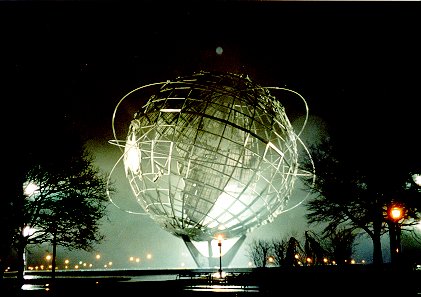
Before the battle, toga-clad spectators and participants crowded into the lobby of the Queens Museum of Art, downing free special lemonade after beer after wine. (Alcohol was free to those donning togas.) Last minute preparations were still being made with the boats. The battle would take place at the reflecting pool at Flushing Meadows Park in Queens, former home of the 1964 World’s Fair, within view of the Unisphere.

Families walked around with children, who waded in the pool. Darkness soon settled, and floodlights bathed the pool in light. The audience was getting restless, and took advantage of the boxes of bread and tomatoes that lay around the area, begging to be used, bombarding members of each side.

And then the battle really began. Each ship came out to be greeted by cheering and tomatoes. From my vantage point, it was difficult to see exactly what was going on, as the scene was shrouded in smoke, criss-crossed with flying tomatoes, and obscured behind huge splashes of water. Nevertheless, chaos ruled the scene. Bystanders jumped into the pool, taking part in the battle themselves. When the pigboat sailed in in all its swine-y glory, the audience gleefully jumped aboard.

Near the end, a replica of Riley’s favorite ship, the Queen Mary 2, came out and was promptly set on fire, as the battle went on around it. Soon, fireworks rocketed out of the ship, nearly hitting the audience at times.

According to other sources, since I couldn’t tell what exactly went on, the Queens Museum won the battle, but really, everyone did, in his or her own way – I even spotted a few audience members lugging chunks of boats back to the 7 train.

For the rest of the photos, go here.

Friday, July 31, 2009

The L Magazine: Mapping Mannahatta, The Original Manhattan


Markley Boyer, The Mannahatta Project, Wildlife Conservation Society

On The L Magazine:

Picture a time when Kips and Turtle Bays were actual bays, and East Harlem was nothing but plains. When Queens and Brooklyn were still considered part of Long Island, the was Bronx part of Westchester, and the center of New York was just Manhattan. Now it’s a paved paradise with buildings, streets and sidewalks, but back then two-thirds of that island were covered in green forests. Deer, otters, bobcats, and rabbits roamed the thickets. The island was smaller then: 11,817 acres instead of its current 13,690 acres. When Mannahatta was truly the island of many hills, as the Lenape Indians, the original New Yorkers, called it. Welcome to New York, circa 1609.

It’s been 400 years since Henry Hudson and his crew of the Half-Moon set sail up what would become his namesake river and, my oh my, how New York has changed. Instead of soaring trees, there are towering buildings made of brick and steel. Our urban opera now includes honking motorists, screeching tires, constant chatter, construction noise, jackhammers, and blaring music, with the occasional bird chirp somewhere in the mix.

Even though the wild Manhattan of old is long gone, you can get a sense of it in Mannahatta/Manhattan: A Natural History of New York City, 1609 to 2009, a project helmed by Eric Sanderson, landscape ecologist at the Wildlife Conservation Society (WCS). The endeavor exists both as a book and exhibit form at the Museum of the City of New York.

Eric Sanderson thought he’d always live in northern California, where he grew up and got his PhD in landscape ecology at the University of California, Davis. Then he got a job offer from the WCS, which is headquartered at the Bronx Zoo.

In between his far-flung trips trying to figure out how to conserve international ecological systems, Sanderson made his home on City Island, which he describes as “a little bit like an old fishing village, New York-style.” During the weekends, he ventured into Manhattan and acted like a proper tourist, though he couldn’t turn his mind off. “I would go to the Empire State Building and try to figure out how this landscape works,” Sanderson said. “Like how the savannah in Africa works: how does this ecosystem work in New York? It was so different from what I’ve grown up with.” “Manhattan is so extraordinary,” he continued, “it is the densest place in the United states by twofold.”

Whenever he was about to visit a new location, Sanderson did his research and New York was no exception. Often, he would look at old maps, which greatly intrigued him. This was how he stumbled upon the British Headquarters’ Map, dating from 1872. The map was created during the American Revolution by the British Army to figure out strategic strong and weak points throughout New York in order to protect itself from the Americans. The meticulously detailed map included the original shoreline, elevations, and locations of marshes, streams, wildlife and plant life.

“If you take that map and geo-reference it to the city today, then I could figure out where those streams are,” Sanderson said. “All those features are long lost from the island of Manhattan.” That’s exactly what he did, and armed with the map and a GPS system, he created the Mannahatta Project.

The project illustrates that old Manhattan for us through 3D digital renderings combined with photographs of actual similar and current ecosystems, to help create realistic speculative renderings of the wild island by Markley Boyer.

Select images from the book are presented in the exhibition at the City Museum, along with maps paintings, and written observations from various travelers at the time. The animated 3D map, where the landscape of Mannahatta morphs into that of contemporary Manhattan, is projected in the middle of the room, where it feels a little like a campfire. Meanwhile, signs for each section of the exhibit mimic subway signs.

“I really wanted something beautiful and emotional, so that you could connect it first with your heart, and then with your mind,” he said of the design of the exhibit. “The more time you spend with it, the more you experience it.”

What do you learn? Collect Pond was the biggest source of fresh water on the island. After the local tannery polluted the pond and it was filled in, the location became the swampy area known as Five Points, where violent gangs would fight it out, as depicted in Martin Scorsese’s Gangs of New York. Times Square was home to the confluence of two streams that poured into the Hudson River and to Beaver Pond. The Hudson shores were simply sand banks and the East River shores were marshes.

When asked about further expanding the project to cover the outer boroughs, Sanderson said he had a student working on Queens and Brooklyn right now, but there is no funding, so it’s just a summer project. “Queens had 50 percent wetlands,” he noted.

He is also often asked about creating similar projects for other cities, like London and San Francisco. “Certainly, a lot of other cities in the world, you can do it right,” he said, but there are no further plans.

Currently, Sanderson is working on a competition for architects and landscape designers through a fellowship at the Van Alen Institute. In September 2009, contestants will be invited to work design a sustainable working plan for Manhattan in the year 2409, working within predetermined guidelines. “A beaver needs habitat, and you have to supply food and shelter for it to work,” Sanderson says, “so where is the city going to get those things? What will the city produce, what will it get from the surrounding regions, and get from the world?”

While today’s Manhattan is vastly different from the Manhatta of four centuries ago, Sanderson still believes the city has a bright future. “I’m really optimistic about the future of New York City,” he said. “I think people are really ready and hungry for wanting to know how to live their lives in ways that are meaningful and satisfactory, but not in ways that harm the environment.”

He pointed to architecture and the green revolution as evidence: “People are thinking about how we can live in cities in a resource-efficient manner, and there’s a push to express them more fully. Like green roofs that don’t rely on air conditioning.”

“Even closing streets like we do over the summer and encourage people to ride bikes,” he added. “If you take cars off the streets, it becomes really rideable and fantastic.”

When I asked him about his favorite New York City spot, Sanderson responded enthusiastically: “Inwood Park—the place that’s closest to Manhattan and closest to the Hudson River. It has great, beautiful hills and it’s so far uptown that people still haven’t been there.”

Sunday, July 12, 2009

The L Magazine: Now Anyone Can Surf The Subway Like a Native


From the L Magazine:

Being a New Yorker for 24-and-something years, I know where I'm supposed to stand on the subway platform if I want to transfer from the uptown F to the Brooklyn-bound L to the Queens-bound G. I stand in the back of the downtown E if I want to get off at West 8th Street at the West 4th Street station, and the front of the train if I want to go to West 3rd Street. After making these trips over and over again, I just learned from experience.

It comes with the privilege of being a New Yorker. It's something you learn after taking the train over and over again. The idea behind the new smartphone application Exit Strategy NYC (which tells you where to stand on what trains for the quickest walk to your desired connection) is nice for those not familiar with the intricacies of the subway, but what about those hard-earned fast-transfer stripes? I guess some things still come with being a seasoned New Yorker, like being flashed at least once on the train. (For me, it was my freshman year of high school on the R train.)

The L Magazine: This too Shall Pass


From The L Magazine:

The Vanished Empire
Directed by Karen Shakhnazarov

Outdoor lines for beer, black market Pink Floyd and Rolling Stone records, Wrangler jeans — this is what Soviet Union has become by the 1970s. As the country slowly but surely falls apart, Sergei, our protagonist, comes together.

Director Karen Shakhnazarov shows us Sergei's story, along with his friends Stepan and Kostya, and the love of his youth, Lyuda, as they deal with the trials and tribulations of being young in the Soviet Union while obsessing over Western goods. We peer into their lives, watching a confrontation from beyond a cement fence, and watching the three young men walk away into the distance after a brawl. They drive around in shiny Tatra cars, decked out in American jeans, while outside, there are rusted playgrounds and soldiers stationed on every corner.

"Moscow still in one piece?" Sergei's grandfather asks.

"I guess," Sergei answers stoically.

Sergei's grandfather, once a famous archaeologist, tells him how he discovered the ancient city of Khurezm, Central Asia's "City of Winds." After Genghis Khan and his army shut the city off by filling its canals, it became the Vanished Empire, nothing left but wind-worn stone ruins where the great people used to live. This could be said of Moscow, and, at a certain point, of Sergei as well, but he can still change his fate.

Despite academia running in Sergei's blood, he is preoccupied with other things: he makes out with girls in class, and sells his grandfather's books to buy black market records and jeans. The love triangle between Sergei, Stepan and Lyuda is but a tiny part of the greater picture: Sergei needs to find his own path to his destiny.

"Our address says Soviet Union," the older Stepan tells the older but unseen Sergei in a concluding flash-forward, "but I don't recognize any of it." He continues, "What's left?" After the repercussions of his own personal fuckups and lost loves, Sergei leaves behind his superficial life — and the Soviet Union itself. Through posters and snippets of news clips, we experience the fall of Moscow and the USSR, which represents Sergei's past. The only way he could find himself was by leaving his home country. He manages to pick up his pieces and find his place in life — though the same couldn't be said of the Soviet Union.

Opens July 10

Monday, July 6, 2009

The L Magazine: Animals in the Subway: Better Heard than Seen


Picture from Antenna Designs.

From the L Magazine:

Amidst the squeaks, creaks and groans of trains rushing by and people chattering, listen closely and you’ll soon be able to hear birds, leaves and gushing streams. But those sounds aren’t real; they’re part of a proposed installation to bring nature back to New York’s underground at the 96th Street and Broadway stop.

Using a combination of localized environmental nature sounds and Japanese anime-inspired flower sculptures, Antenna Designs, the firm behind the installation, wants us to think about the New York that used to be here, back in the time of the Dutch, while we go about our present-day New York activities.

Antenna Designs, also brought us the new subway car and MetroCard kiosk redesigns, so they at least know what they’re doing.

The project reminds me of the interactive sound installation at 34th Street-Herald Square, Christopher Janney’s “Reach New York, an Urban Musical Instrument,” where riders can play with sensors that activate sounds. It got annoying after a while, especially while waiting 20 minutes for a train at 2am and I don’t think it works that well anymore. Let’s see how this exhibit fares after a week, and whether people will even notice the sounds.

Read more about the project in this Times piece, and click here check out some of the other work Antenna has done.

Tuesday, June 30, 2009

The L Magazine: Sorry, Thanks


From L Magazine:

After finally taking his untouched bike out of the closet and attempting to ride down one of San Francisco's steepest hills, Max (Wiley Wiggins) gets a cut. As his long-term girlfriend, Sara (Ia Hernandez), cleans his wounds, he says, "It's kinda pretty but gross at the same time." Isn't that what relationships are all about?

Sorry, Thanks — which plays at 9:30 tonight at BAMcinemaFest — isn't about Max and Sara. Rather, it's about Max and his two-night stand, Kira (Kenya Miles). Writer-director Dia Sokol subtly and effectively treats viewers to a view of their fascination.

Kira is practical. Her goal in life is to become a fact-checker. She wants something more solid. During a job interview for a copyediting position, the interviewer asks, "Would you be up for something this regimented?" Kira would. Miles' wide-eyed look, though, seems to contain unplumbed depths.

Max is the awkwardly quirky guy who rambles on. His friends and girlfriend describe him as a sweet asshole; Wiggins speaks with a funny yet weird and uneasy tone. Despite his adulterous dalliances, he and Sara seem to be in love and completely comfortable with each other as they make funny faces and speak in silly voices.

Sokol's storytelling emphasizes how both Kira and Max try to grow into their lives, but are somehow stuck. Kira attempts bathroom sex with new boyfriend Simon (Donovan Baddley). Then she immediately sleeps with Max again. Max gets a cat, which he soon forgets about and loses. One step forward, two steps back.

Cinematographer Mathias Grunsky makes great use of the lines, sloping hills and vibrant murals of the Mission District, while the editing constantly juxtaposes the two lives, scenes complimenting each other perfectly: Max interviews two new staff members, Kira interviews for a position. But ultimately, you remember the tale Sokol tells: it's sad, but her understanding of Max's indecision rings so true to life that you can't help but place yourself in his shoes.

The L Magazine: All Eyes (and Ears) Are on Coraline


Coraline, the movie

This is my second piece for The L Magazine's website:

Coraline Jones makes fun of her new neighbor, Wybie Lovat, “Why be born?” she taunts. He responds: “Ordinary names lead to ordinary expectations.” Coraline, the name that came out of creator Neil Gaiman’s typo, is not ordinary in the slightest bit.

Coraline the novel, written by Neil Gaiman, beget the movie, directed by Henry Selick, which in turn beget the musical, directed by Leigh Silverman and written by David Greenspan. The result is three different yet similar yet wonderfully entrancing versions of Coraline’s story and her adventures in the Other World.

Coraline, our heroine in all three tales, moves with her mother and father into a new apartment in a new neighborhood. Her neighbors are Mister Bobo (Bobinsky in the film), the thickly Russian-accented man training unseen circus rats upstairs, and Miss Forcible and Miss Spink, sisters who are former stage actors now left to reminisce about their starry pasts downstairs. Coraline’s parents are too absorbed in their work to be concerned with her, so she keeps herself amused at exploring the house and area. During her navigations, she finds a locked door that is bricked up. This is the door that leads to the Other World, where she finds her Other Mother and Other Father and Other neighbors. This world is familiar to her – same furniture, same people – but there’s a different aura that Coraline falls in love with, a world where she isn’t ignored and is free to do as she pleases.

What exactly makes someone an Other? Their button eyes, of course. Soon enough, Other Mother and Other Father want Coraline to stay, and all she has to do is replace her ordinary eyes with those glistening black buttons. Creeped out, Coraline understands that not everything is perfect in this Other World, ruled by Other Mother.

Neil Gaiman’s language in Coraline the novel is accessible yet imaginative. Gaiman (who previously brought us The Sandman, among other titles) originally wrote the tale as a scary bedtime story requested by his daughter. The result resembles a much darker Alice in Wonderland. Both Alice and Coraline offer escapes for their female leads into experiences tinged with magical realism, creating the extraordinary out of the ordinary. Alice’s adventures are more out there, though, and aren’t as grounded in an askew version of reality as Coraline’s. In both, though, the readers are free to visualize their own heroine and her world, which turns us into participants in the fiction.

The musical, directed by Leigh Silverman, disregards the film and instead takes its cues from the book, with the added bonuses of music, singing, and dancing. Stephen Merritt – best known as leader of The Magnetic Fields and singer-songwriter behind their epic three-disc ode to love album, 69 Love Songs – understands the world of Coraline perfectly. His piano orchestra, performed by Phyllis Chen, plucks merrily and creepily with the songs and movements of the cast.

David Greenspan, who wrote the Coraline musical, is known for playing with identity and gender roles, and this production is no exception. He himself plays the eccentric, high-pitched growling Other Mother, donning a thick black and silver wig, red apron, and the signature button eyeglasses. The slinky Julian Fleisher plays Cat, the narrator, and, most amusingly, the tiny door that leads to the Other World. As Coraline, middle-aged actress Jayne Houdyshell isn’t what I pictured, but she completely embodies the character, seeming younger and smaller. Casting her in the lead matches the spirit of Coraline: you have to suspend your disbelief and trust what is in front of you. Houdyshell seems a young girl, dressed in green Wellingtons and a pink cardigan vest, and she plays it well. I can’t help but wonder, though, what a younger actress would have done in her place.

Unlike this stage Coraline, Henry Selick’s film version is a departure from the original story, and it might be my favorite of the three. The plot is restructured and there are new characters. There’s Wybie, whose grandmother is the Jones’ landlady. He gives Coraline a doll, which bears a suspicious likeness to her, right down to its yellow coat. This doll becomes the narrative vehicle that leads Coraline to the door. Selick (who previously directed The Nightmare Before Christmas and James and the Giant Peach) has a distinct visual style that’s very apparent in Coraline. Objects in his stop-motion adaptation swirl and pop out – even without the help of 3D glasses.

While occasionally more kid-friendly (it’s rated PG, after all), the film does have its darker moments. Instead of rats, Mister Bobinsky’s circus creatures are kangaroo mice that turn into rats in the Other World. On the other side of the door, the Other Mother transforms into a tall and thin spidery she-creature that towers over Coraline, throwing the girl into her web. The Other Spink and Forcible are awfully risqué, wearing skimpy costumes despite their fat frames.

One moment from the film that I sorely missed in the musical was Coraline’s story about being brave. Before embarking back to the Other World to save her parents, she tells the cat about the day she and her father escaped wasps over the hill. Her father yelled at her to run while he stayed, allowing the wasps to sting him as she got away. That was, as he said, doing what he had to do as her father. When they reached home, he realized he dropped his glasses and had to go back to retrieve them. He was scared, but he went anyway because he needed his glasses. That was, he explained, being brave. Coraline channels that bravery as she goes back to the Other World to save her parents and the ghost children, fully aware of the consequences of doing so. This comes across more in the book and the musical (film Coraline is saved by Wybie rather than by taking matters into her own hands). The movie's Coraline, though, is also endearingly quirky, walking around wearing a driver’s cap and using a forked branch as a guide.

Despite its kid-centric narrative, Coraline is for both children and adults. While Gaiman won the ALA Notable Children’s Book Award for the novella, he recognized the wider appeal of the story. Fairy tales aren’t just for children. Tim Burton is currently directing a remake of Alice in Wonderland, Through the Looking Glass, and it’s pretty much guaranteed to be a hit.

When I saw the film a couple brought their baby, who promptly started crying when the Other Mother transformed into her true, spidery self. While standing in line to pick up tickets for the musical, the ticket seller asked the mother with her two children in front of us whether she knew about the play. She said she did. There were more kids inside, and they gasped and laughed at the right times during the musical.

One can't help wonder why has Gaiman’s story inspired these adaptations in such quick succession. Coraline offers a new take on the fairy tale in that she (rather than a “he”) is the daring adventurer. She dreams and seeks something more than a boring new life that presents the same old junk all the time. But when she gets exactly what she wanted, she finds out wishes aren’t always as magical as they appear to be, as Other Mother swiftly demonstrates. In the book and the musical, Other Mister Bobo tells Coraline that Other Mother will give her everything she ever wanted. Coraline pauses, and then says, “You can’t have everything you want all the time. Where’s the fun in that?”

It’s impossible to say that any one version can stand on its own, because each one informs the others, just like the books and films in the Harry Potter series: where the movie skips over something, the book fills in, and the viewers/readers are still able to follow the story.

In all three versions of Coraline, when the heroine and the cat have their first conversation, she asks him his name. He answers: “We cats don’t need names, we know who we are; you people, on the other hand, you don’t know who you are.” But it turns out she does know who she is: she’s Coraline Jones, not Other Coraline. And whether on page, screen or stage, her story remains captivating.

Performances of Coraline continue through July 5.