Showing posts with label Exploring. Show all posts

Thursday, April 16, 2009

A Deserted World


A look at New York, post-New Yorkers. Picture taken from io9.

I enjoy exploring abandoned places. By "abandoned places," I mean places that used to be in use and now are left to stand alone, letting nature and time works its course. Now I get to indulge in my obsessions with the new History Channel series Life After People, which does just that, but at a larger scale. What would the world today look like without people to maintain it? Judging from these pictures, beautifully devastating, I'd say. I must watch. The show premieres on April 21st.

Wednesday, October 29, 2008

Dan Barry's Explorers' Club


Sean called my attention to Dan Barry's latest This Lands column in the New York Times, where he talks about the Explorers' Club and their adventure to the unused Pyramid in Memphis, Tennessee. I like it because it reminds me of my trip to Tennessee and reminds me of our Expeditioners' Club.

Saturday, October 18, 2008

The Remains of Renwick Ruins


[Published in the Brooklyn Rail, October 2008]

Driving on the 59th Street Bridge, you pass over Roosevelt Island, that strip of land between Manhattan and Queens. The northern tip of the island is home to a lighthouse and a small park and its middle section is a concentration of high-rises.

By contrast, a tall fence decorated with “No Trespassing” sign forbids access to the southern portion of the island. On the other side of the fence, there are trees, a paved road, and a second fence surrounding Renwick Ruins, the crumbling façade of a former Smallpox Hospital.

After years of being teased by the ominous ruins, my friends and I decided to go for it: we planned a trip to explore the Smallpox Hospital.


Previously known as Blackwell’s and Welfare Island, Roosevelt Island was home to correctional facilities, hospitals and asylums. Built in 1856, the Smallpox Hospital served a number of functions before being closed a century later when the City Hospital complex of which it was a part moved to Queens. A number of institutions on the island closed or moved away leaving the Smallpox Hospital to deteriorate. It was designated a historical site by the Landmark Preservation Commission in the 1960s.

Taking the tram from Manhattan onto Roosevelt, my friends and I wondered how we would get into the hospital. We knew about the fence, but we didn’t know if it would be easy to get around it or if there was regular surveillance of the area.


We tried our best to act like we weren’t up to no good as we walked along the path that encircles the island. We picked flowers from the blossoming trees and pointed at the seagulls posing offshore atop jutting pier pilings.

We reached the fence—the gate was wide open and there was no one looking so we just strolled right in. A bit further on, we reached Renwick Ruins, named for the hospital’s designer, James Renwick, Jr.

There were spotlights pointed towards the Ruins and another set of signs on the inner fence warning against trespassing and the possibility of collapsing walls. We ignored the signs and jumped the fence. We had made it!


Only the outer walls of the Smallpox Hospital remain. The collapsed interior was visible through hollow window openings. We walked into the center, climbing over piles of bricks and tiptoeing across what we hoped were sturdy pipes.

Midtown and Queens softly glowed in the misty air as we explored the graffiti-covered walls and walked across floors littered with crushed beer cans.

We left the hospital and hopped another fence to look at the now-defunct 53rd Street emergency subway station. The city wants to reopen the station for the E and V lines.

Unlike the planned community and manicured paths to its north, Renwick Ruins stands as a stark reminder of Roosevelt Island’s storied past.


About the Author
Nadia Chaudhury is a former Layout Editor for the Rail and, outside of traveling, writing, and taking pictures, is a rowing and waterfront enthusiast. Currently, she goes to school in Boston, but will forever be a New Yorker. Check out her blog at mysticchildz.blogspot.com

More pictures can be found here.

Friday, October 17, 2008

Exploring Bennett College


[Published in the Brooklyn Rail, September 2008]

The Bennett School for Girls in Millbrook, New York, also known as Bennett College, was abandoned in 1978 after filing for bankruptcy. Its ruins now stand desolate, which for us means it is time to go exploring. We pretend to walk towards Carroll Hall, once part of the college, but now converted into luxury apartments with central air, a pool, and a tennis court. Double-checking to make sure no one sees, we make a dash through the thick green surrounding the building and duck under cobwebs as we enter the dusty school.


Founded in Irvington, New York by Miss May F. Bennett in 1890, the college moved to Millbrook in 1907. It was a private all-girls school and offered Bachelor’s degrees to its students. The rising popularity of coeducational facilities and a failed attempt to merge with the nearby Briarcliff College led to Bennett College filing for bankruptcy in 1977. The school was officially closed a year later.


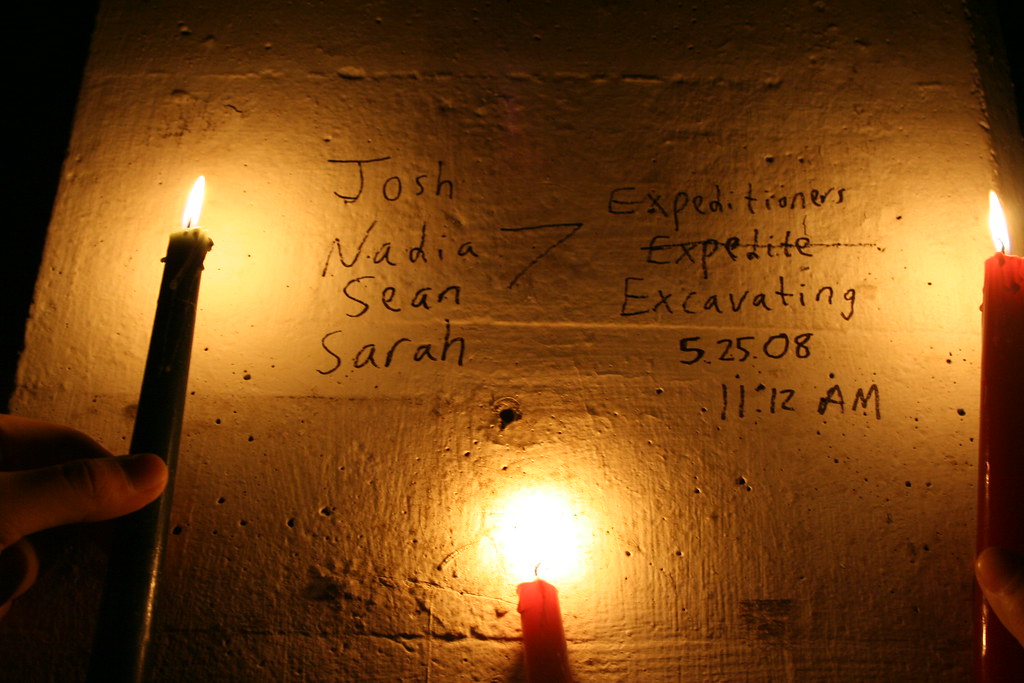
Everywhere in the now empty, peeling halls of Bennett reveal hints of its previous life: solitary hangers in open closets, springs from old box springs, shredded mattresses, and faded wallpaper in the dorms. A tag on a wall declares, “Don’t go in there.” The floor is strewn with crushed beer cans, cigarette butts, and even toilets. As we pass the rooms with wide, open windows, we are careful not to catch the attention of the neighboring condo residents. We make our way to the basement, crawling through a tiny opening. We use candles to light our way through the boiler room. As we climb higher, we have to watch our steps to avoid falling through collapsing floors. In some areas, we edge along the wall to avoid the soggy centers of the floor.


Now, Bennett is for sale. The school’s 29 acres are being pitched as another educational facility, a conference location, or a health-related complex.


After wandering up and down every floor and through every room, we leave covered in dust and scraps. We rush back to the street, acting as if we just played a set on the Carroll Hall tennis courts.


About the Author

Nadia Chaudhury is Layout Editor for the Rail and, outside of traveling, writing, and taking pictures, is a rowing and waterfront enthusiast. Check out her blog at mysticchildz.blogspot.com


More pictures can be found here.